
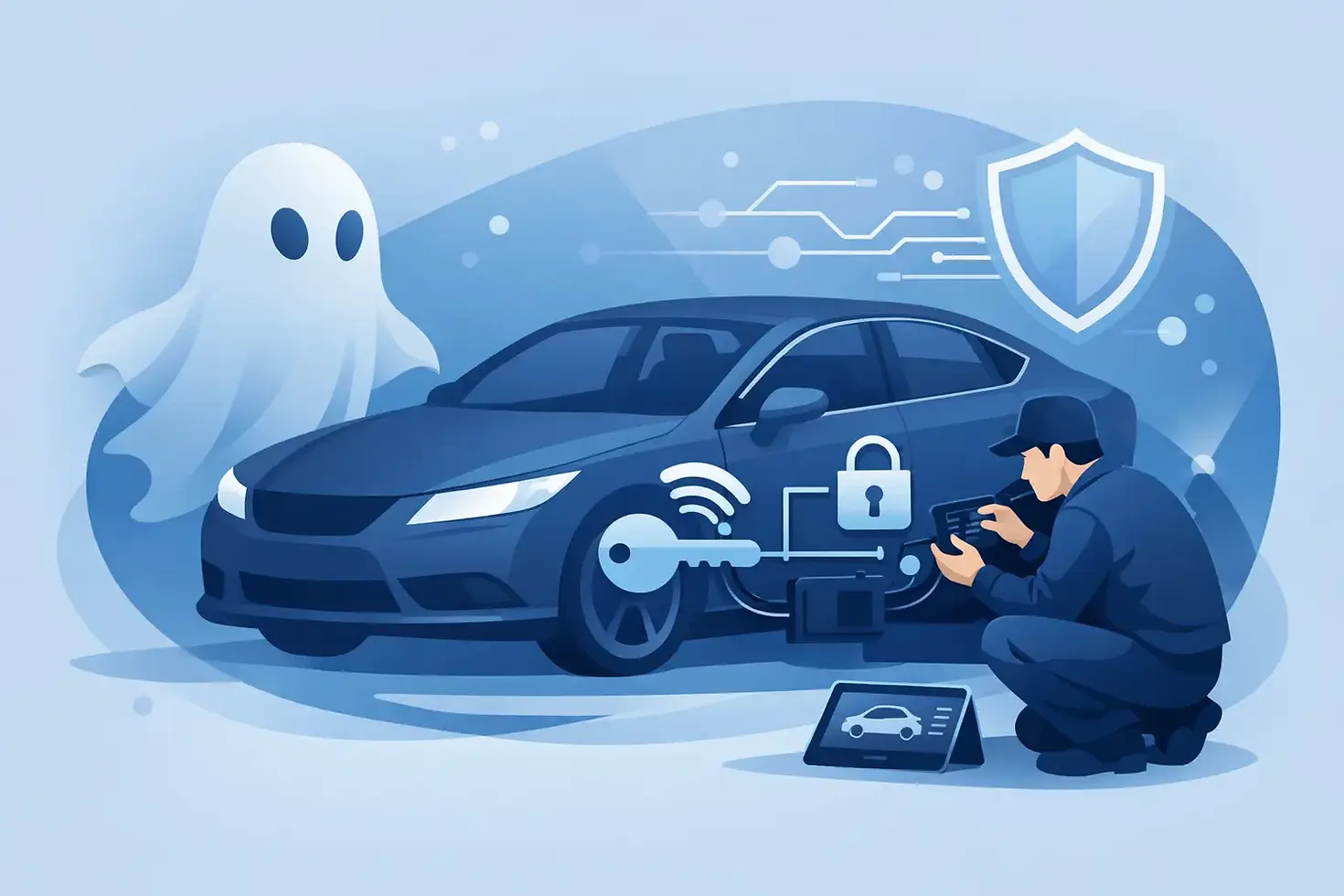
Ghost Immobiliser Installation Explained
A stolen vehicle is rarely taken because it was left carelessly. More often, it is taken because modern thieves are organised, equipped and quick. That is exactly why ghost immobiliser installation has become such a serious consideration for owners who want stronger protection without altering the look, feel or character of the car.
For many drivers, particularly those with Audi, BMW, Mercedes-Benz, Porsche, SEAT or Skoda models, the appeal is obvious. A Ghost system adds an intelligent layer of defence that works quietly in the background. There are no obvious fobs to spot, no visible keypads on the dashboard and no compromise to the cabin’s factory finish. Done properly, it feels less like an aftermarket accessory and more like a discreet extension of the vehicle’s own architecture.
What a Ghost immobiliser actually does
A Ghost immobiliser prevents the engine from starting unless the correct disarm sequence is entered using existing vehicle controls. That sequence might use buttons on the steering wheel, centre console or door controls, depending on the vehicle and the installation approach. Without the correct sequence, the vehicle will not start and drive away, even if someone has the key.
That matters because theft has changed. Traditional hot-wiring is not the main threat for many modern cars. Relay theft, key cloning and electronic attack methods are now far more common. A Ghost system is designed to counter that problem by adding a driver authentication step that sits outside the usual key-based process.
In practical terms, it means a thief may unlock the car, sit inside it and attempt to start it, yet still go nowhere. That extra barrier can be the difference between a failed attempt and a vanished vehicle.
Why ghost immobiliser installation is not just about the product
The hardware matters, but the installation matters just as much. A premium security system fitted poorly can create reliability issues, leave evidence of tampering or undermine the vehicle’s electrical integrity. That is why experienced owners tend to look beyond the box itself and focus on who is fitting it, how it is integrated and whether the finished result respects the standards of the car.
A well-executed installation should be discreet, electrically precise and sympathetic to the original systems. Wiring should be routed cleanly, connections should be secure and the installer should understand the vehicle platform rather than applying a generic method to every car that enters the workshop. This is especially important on prestige and performance vehicles, where owners rightly expect factory-level care.
There is also a practical point here. Poor fitment can lead to faults that are blamed on the immobiliser when the real issue is installation quality. Warning lights, battery drain, intermittent starting behaviour or untidy trim refitting are not characteristics of the system when it is installed correctly. They are signs that the engineering standard has fallen short.
What happens during a Ghost immobiliser installation
The process usually starts with vehicle assessment. Not every car is configured in exactly the same way, even within the same model range. Trim level, control layout and electrical architecture all influence the most appropriate installation strategy.
The unit itself is fitted discreetly within the vehicle, connected into the relevant data network and configured so it can communicate correctly with the car’s systems. From there, the installer programs a unique button sequence chosen by the owner. This code becomes the authorisation method used before driving.
Once fitted, the system is tested thoroughly. That should include checking correct arming and disarming behaviour, verifying start prevention when the code has not been entered and confirming that standard vehicle functions remain unaffected. A professional handover is equally important. Owners should leave knowing exactly how to use the system, how service mode works and what to do if they change vehicles or need support later.
Where it makes the biggest difference
Ghost immobilisers are particularly well suited to cars that are desirable, easy to move on, or vulnerable to keyless theft. That includes a wide range of German and European models, performance variants, prestige SUVs and daily-driven vehicles parked on streets or open driveways.
They are also valuable for owners who do not want visible aftermarket security. A steering lock can be useful, but it is obvious, inconvenient and hardly elegant. A tracker can help with recovery, but that is after the theft has already happened. A Ghost system sits earlier in the chain by helping to prevent the vehicle from being taken in the first place.
That said, security is rarely about one single measure. For some owners, a Ghost immobiliser works best as part of a wider strategy that may include secure key storage, physical deterrents and tracking technology. It depends on the vehicle, where it is kept and the level of risk involved.
Choosing between professional fitting and self-installation
For technically confident owners, self-installation can sound appealing. There is satisfaction in understanding your vehicle, fitting components yourself and keeping close control over the process. On the right platform, with the right guidance and a disciplined approach, it can be done.
But this is one of those upgrades where honesty matters. Modern vehicle electronics are not forgiving in the way older systems often were. Removing trim incorrectly, disturbing sensitive wiring or making poor electrical connections can create problems that are expensive and time-consuming to rectify. If the goal is discreet protection with no compromise to the vehicle, professional installation is often the stronger route.
That is especially true for owners of newer, higher-value or more complex models. Precision engineering is not only about getting the system to work. It is about preserving the quality of the vehicle while doing so. A premium retrofit should feel invisible once completed.
For drivers who want that level of finish, a specialist installer with platform knowledge offers reassurance that generic workshops often cannot match. Retro Fit Cars sits firmly in that specialist category, with an approach shaped by OEM-style integration, refined fitment and the sort of workmanship discerning owners expect.
Questions worth asking before you book
Not all installation services are equal, and this is where informed owners tend to separate genuine specialists from general fitters. Ask how familiar the installer is with your make and model. Ask whether the fitment is discreet and whether trim and wiring are handled to a factory-conscious standard. Ask what support is available after installation and how the handover is managed.
It is also sensible to discuss your use case. If the car is used by multiple drivers, the setup should be practical for everyone. If the vehicle goes in for servicing regularly, service mode needs to be clearly explained. If you are combining this with other upgrades, such as reverse cameras, parking sensors or mirror retrofits, coordinated installation may reduce repeated strip-downs and keep the vehicle’s electrical work more coherent.
Price will always be part of the decision, but it should not be the only one. There is a difference between paying for a device and paying for engineering. On a vehicle you value, that difference matters.
The real value of a discreet security upgrade
What owners often appreciate most after a Ghost immobiliser installation is not the technology itself but the confidence it brings. You park the car and walk away knowing there is an additional layer of protection that cannot be spotted through the glass or defeated by simply amplifying a key signal.
There is also something to be said for preserving the vehicle’s design integrity. Enthusiasts and prestige car owners rarely want a cabin cluttered with visible add-ons. They want security that respects the car. That is where this type of solution stands apart. It is effective because it is intelligent, and it is desirable because it is discreet.
As with any specialist upgrade, the best result comes from matching the product to the vehicle and the installation to the standard the car deserves. Get that right, and a Ghost system becomes more than a theft deterrent. It becomes part of a carefully considered ownership experience - one built on craftsmanship, engineering confidence and genuine peace of mind.
If you are weighing up whether it is worth it, the better question may be this: if your vehicle disappeared tomorrow, would you wish you had fitted one while you still had the choice?


Comments