
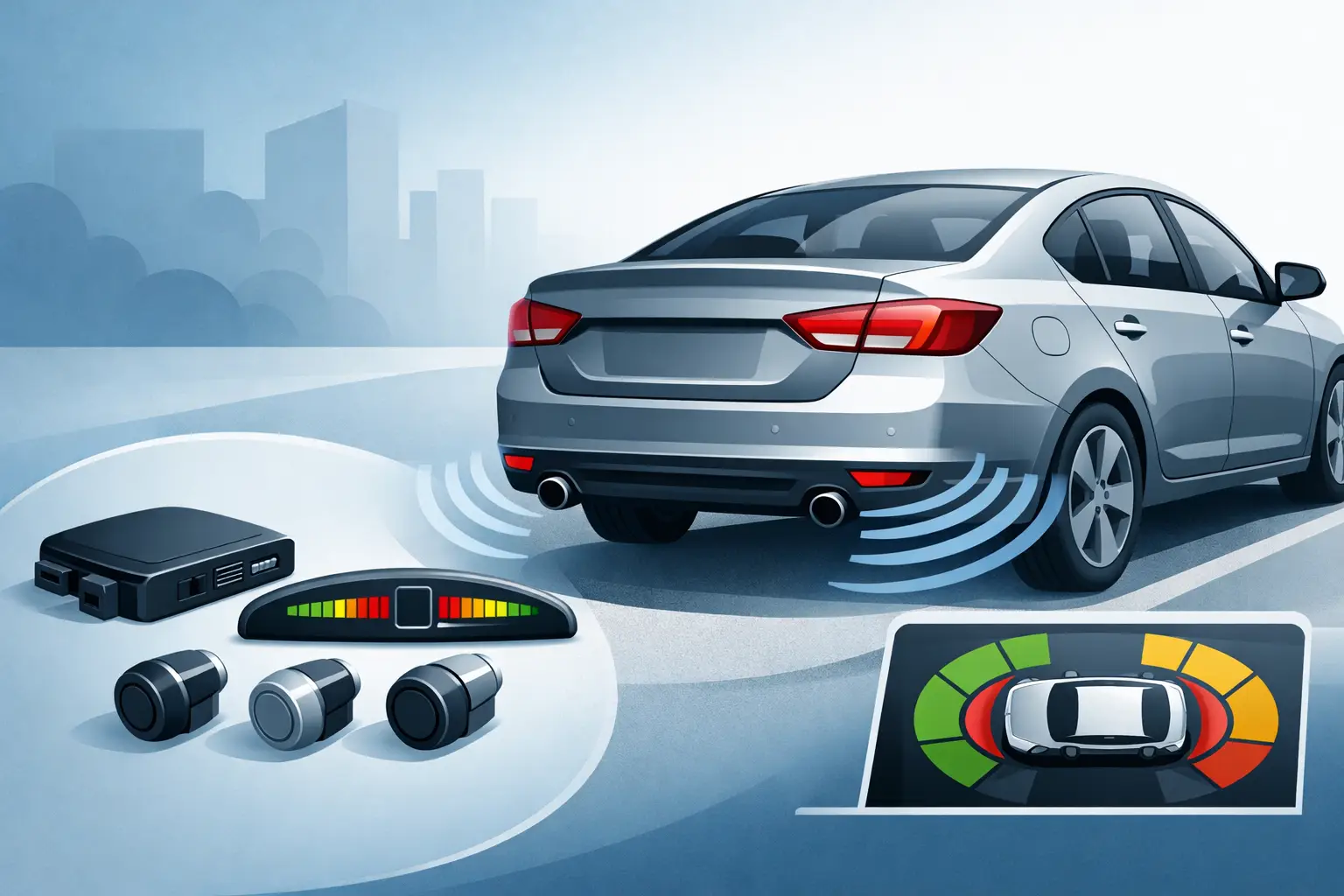
Best Parking Sensor Kits for OEM-Style Fitment
A tight multi-storey bay, a low kerb or a crowded school-run car park can expose the one feature your vehicle should have had from the factory. The best parking sensor kits do more than sound an alarm near an obstacle. Correctly specified and precisely installed, they provide measured, discreet assistance that feels native to the vehicle rather than added as an afterthought.
For owners of Audi, BMW, Mercedes-Benz, Porsche, SEAT, Skoda and other European marques, the distinction matters. A poorly fitted kit can leave visible wiring, mismatched sensor colours and unreliable alerts. An OEM-style retrofit preserves the clean lines of the bumper, works predictably in daily use and adds a genuinely useful layer of confidence when manoeuvring.
What separates the best parking sensor kits from cheap alternatives?
The right kit is not necessarily the one with the highest sensor count or the loudest buzzer. Its value lies in the quality of the components, their compatibility with the vehicle and the standard of installation. Parking assistance is a small system with several parts that must work together: sensors, mounting rings, a control module, wiring loom, audible warning and, where specified, visual integration.
OEM or OEM-quality ultrasonic sensors are generally the strongest choice for a premium retrofit. They are designed to read short distances accurately, withstand weather exposure and sit flush in the bumper. Their housings can be colour-coded to the vehicle, avoiding the conspicuous black circles often associated with basic aftermarket installations.
The controller is equally significant. A well-engineered module should activate at the correct point, distinguish between sensor zones and provide progressive warnings rather than erratic beeping. On a vehicle that supports it, the system may be integrated with the original infotainment display, factory parking graphic or reverse gear signal. This is where a tailored retrofit moves beyond a universal accessory.
There is also a practical difference between a kit that works on day one and one that continues to work through British winters, repeated washing and years of daily use. Weather-sealed connections, correctly routed harnesses and secure bumper mounting are not glamorous details, but they define long-term reliability.
Rear sensors, front sensors or a complete system?
Rear parking sensors remain the most common upgrade because reversing is where visibility is most restricted. Four rear sensors usually provide effective coverage across the bumper, with outer sensors helping to detect walls, bollards and vehicles approaching from an angle. For most hatchbacks, saloons and SUVs, this is the sensible starting point.
Front sensors make a meaningful difference on longer vehicles, cars with low front splitters or models with limited forward visibility. They are particularly useful when easing into tight bays, negotiating narrow driveways or protecting expensive alloy wheels and bodywork near kerbs. Because front sensors need a deliberate activation method, the best systems use an elegant approach: automatic operation at low speeds, a factory-style switch or activation through the vehicle's existing controls, depending on the platform.
A combined front and rear installation offers the broadest coverage, but it is not automatically the right answer for every car. If the vehicle is mainly used for urban parking and has valuable paintwork to protect, it is a worthwhile investment. If reverse visibility is the only concern, a rear-only system may deliver the better balance of cost and benefit.
Reverse cameras and parking sensors also complement each other rather than compete. A camera shows the space behind the vehicle, while ultrasonic sensors warn of objects that may be outside the lens view or difficult to judge in poor light. For a factory-quality parking upgrade, combining both can provide the most complete result.
Choosing a parking sensor kit for your vehicle
Start with the car, not the product catalogue. Vehicle-specific systems are preferable because bumper construction, electrical architecture, trim level and infotainment capability all influence the correct solution. A kit suited to one BMW platform may not communicate properly with another, even where the vehicles appear similar.
When comparing options, assess four areas:
Sensor finish and fitment: The sensors should suit the bumper profile and be paintable in the correct body colour. Flush mounting and accurate positioning make the installation look considered from every angle.
Vehicle integration: Check whether the system can use factory switching, reverse signals, original displays or an appropriate standalone warning unit. Integration should be specified rather than assumed.
Wiring and module quality: A dedicated harness and protected electrical connections are far preferable to improvised splices. The control unit needs a secure, dry mounting location.
Calibration and support: Sensors must be positioned and tested correctly. A capable installer will confirm detection range, alert progression and operation around the vehicle before handover.
Be cautious with kits promoted solely on a low price or a large feature list. Eight sensors, a digital display and multiple modes sound attractive, but they can be unnecessary if the equipment cannot be integrated cleanly. A simpler four-sensor system from a reputable manufacturer, fitted with factory precision, will often feel more premium and prove more dependable.
The importance of bumper geometry
Sensor placement is an engineering decision, not simply a matter of drilling holes at equal intervals. Height, angle, spacing and the bumper's internal structure affect how accurately each sensor reads. Fit them too low and they may pick up the road surface; too high and lower obstacles can be missed. Incorrect angles can create false alerts from the bumper itself.
This is particularly relevant on vehicles with sculpted bumpers, tow bars, diffuser sections or aerodynamic trim. A specialist should inspect the bumper internally before fitting, identifying reinforcement bars, brackets and harness routes. The final appearance matters, but so does ensuring that every sensor has a clear field of detection.
Audible warning versus visual display
A progressive audible warning is often all a driver needs. It keeps attention on mirrors, surroundings and the direction of travel, while the changing tone gives an immediate sense of distance. For many OEM-style retrofits, it is the cleanest and least distracting option.
Visual displays can add reassurance, especially where the factory screen supports parking graphics. However, an aftermarket dashboard display may not suit a prestige interior if it requires a separate screen, adhesive mounting or visible cables. It can be useful in a practical vehicle, but it is rarely the first choice for an owner seeking factory-level presentation.
Professional fitting protects the vehicle's finish and electrical system
Even the best components can be undermined by careless installation. The bumper often needs to be removed for proper access, allowing the sensors to be drilled, seated and connected from behind. This avoids exposed cable runs and makes it possible to secure the loom away from heat, moisture and moving parts.
Electrical work should be equally discreet. Modern vehicles use complex CAN networks and sensitive control modules, so an installer must understand where to collect signals without causing fault codes, warning lights or unwanted battery drain. Universal instructions rarely account for every trim level and model year.
At Retro Fit Cars, parking sensor retrofits are approached as an integrated vehicle upgrade, with appropriate components, careful harness routing and a finish intended to complement the original design. That attention is especially valuable where a customer wants parking assistance alongside a reverse camera, folding mirrors or other factory-style enhancements.
For confident self-installers, a quality kit with clear vehicle-specific guidance can be a viable route. It still demands accurate measuring, suitable drilling equipment, trim-removal knowledge and a disciplined approach to wiring. If there is any uncertainty around bumper removal, paint matching or electrical integration, professional installation is usually the wiser choice. Replacing a damaged bumper or resolving electrical faults quickly outweighs the saving.
Common compromises to avoid
Avoid relying on adhesive-mounted sensors where drilled, flush-mounted sensors are possible. Adhesive solutions can be useful where drilling is undesirable, but they rarely offer the same appearance or consistency. Likewise, do not assume that a sensor kit will detect every low, narrow or absorbent object. Posts, chains, soft shrubbery and sharply angled obstacles can challenge ultrasonic systems, so mirrors and observation remain essential.
Paint quality deserves attention too. Sensors should be colour-matched without applying excessive paint, which can reduce sensitivity. A skilled paint process maintains a refined finish while allowing the sensors to operate as intended.
Finally, choose a system with warnings you can live with. Excessively sensitive sensors become irritating in queues, car washes and traffic, encouraging drivers to switch them off. The best setup is calibrated to be helpful, predictable and unobtrusive.
A well-chosen parking sensor retrofit should disappear into the ownership experience: present when a space is tight, quiet when it is not, and finished with the same care as the vehicle itself. That is the standard worth choosing when protecting both your confidence and your car.


Comments